Mohammad
Mohammad's story, in his family's words

Mohammad

Enter the story

Mohammad's Story

01 — 09

Chapter 1

Chapter 1: Before Mohammad Was Born

Issa, may he rest in peace, was our first child. We spent nine months beside him in the hospital’s intensive care unit, until we lost him approximately two months before Mohammad was born. It was one of the hardest periods of our lives.

Doctors could not establish the precise cause of Issa’s medical condition. Suspecting a genetic cause, they tested both of us. The results showed that we were both carriers of a genetic variant associated with LAMA2-related muscular dystrophy, although this was not the explanation they had expected for Issa’s condition.

The results reached us about a week and a half before Mohammad’s birth. We did not know whether he had inherited the condition. With his birth so close, we did not see a point in arranging additional prenatal testing, and we waited for him to arrive.
Chapter 1: Before Mohammad Was Born
Chapter 01

Chapter 2

Chapter 2: February 11, 2023 — Mohammad’s Story Begins

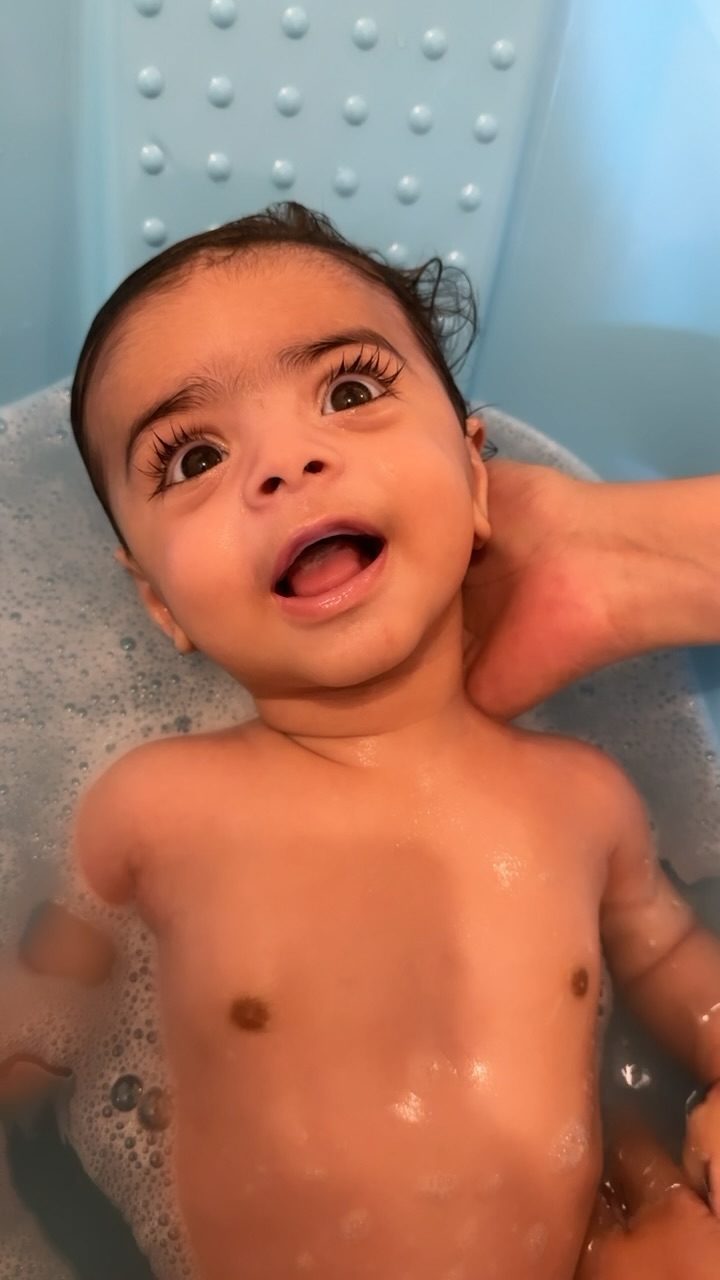
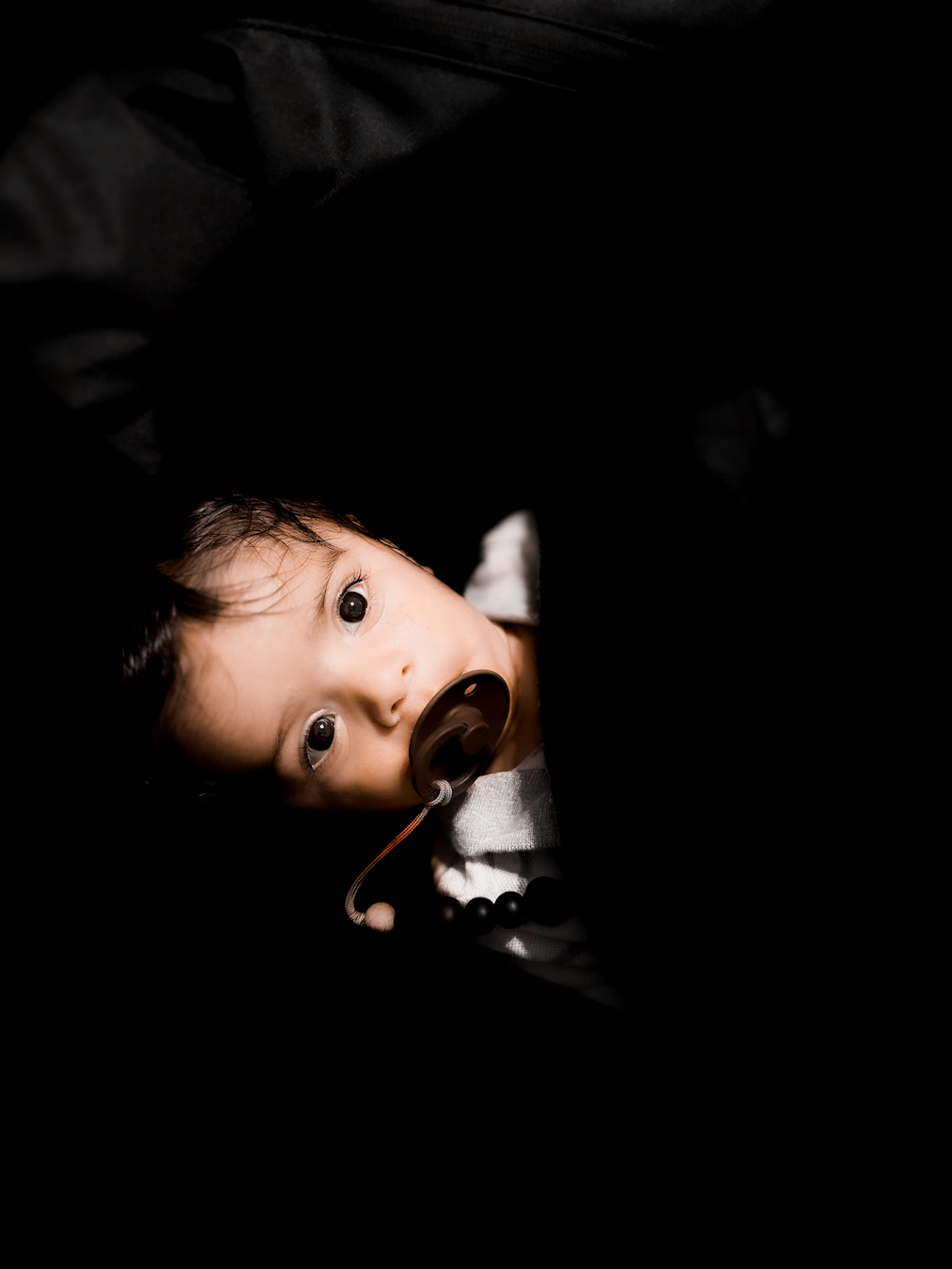
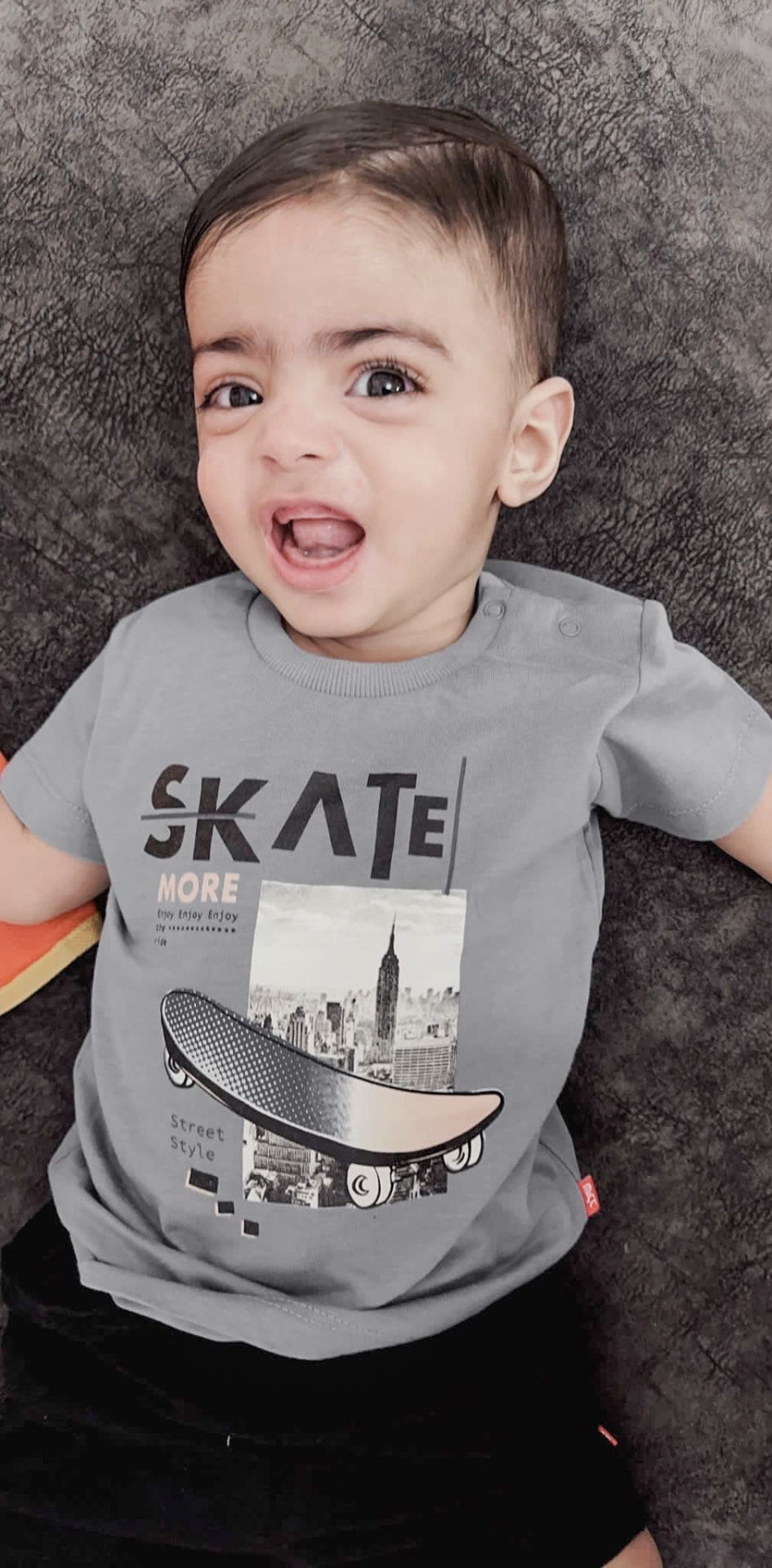
Mohammad was born on February 11, 2023, but he was not breathing at birth, and we did not hear his first cry. His body was almost motionless, with very little movement. The medical team resuscitated him for several minutes before transferring him to the neonatal intensive care unit. I was there, watching everything and waiting for my son to breathe.

From the very first moments, we noticed something unusual about his hands, as well as his limited movement and lack of crying. Doctors ordered a separate genetic test for Mohammad, telling us that results might take one or two weeks. The result arrived about a week after testing and confirmed that Mohammad had LAMA2-related muscular dystrophy.

Chapter 2: February 11, 2023 — Mohammad’s Story Begins
Chapter 02
Chapter 2: February 11, 2023 — Mohammad’s Story Begins
01 / 04
Chapter 2: February 11, 2023 — Mohammad’s Story Begins
02 / 04
Chapter 2: February 11, 2023 — Mohammad’s Story Begins
03 / 04
Chapter 2: February 11, 2023 — Mohammad’s Story Begins
04 / 04

Chapter 3

Chapter 3: From the Joy of Coming Home to Our Hardest Moments

Four days after his birth, we brought Mohammad home without any medical equipment. We were happy to have him with us despite knowing there was a real possibility that he had LAMA2. But less than two weeks after he came home, Mohammad stopped breathing and his heart stopped beating.

We rushed him to the clinic in our town. I was present during the resuscitation attempts, seeing and hearing everything. I heard one doctor say to the doctor who came after her, “It’s a shame. Don’t exhaust yourself. We’ve lost him.” The second doctor knew me personally and knew that we had recently lost Issa. He continued resuscitating Mohammad until his heartbeat returned.

The doctor later told me he had not expected the resuscitation to succeed, but continued trying because he knew what we had been through after losing Issa. At a moment when it seemed everything was over, Mohammad’s heart began beating again.

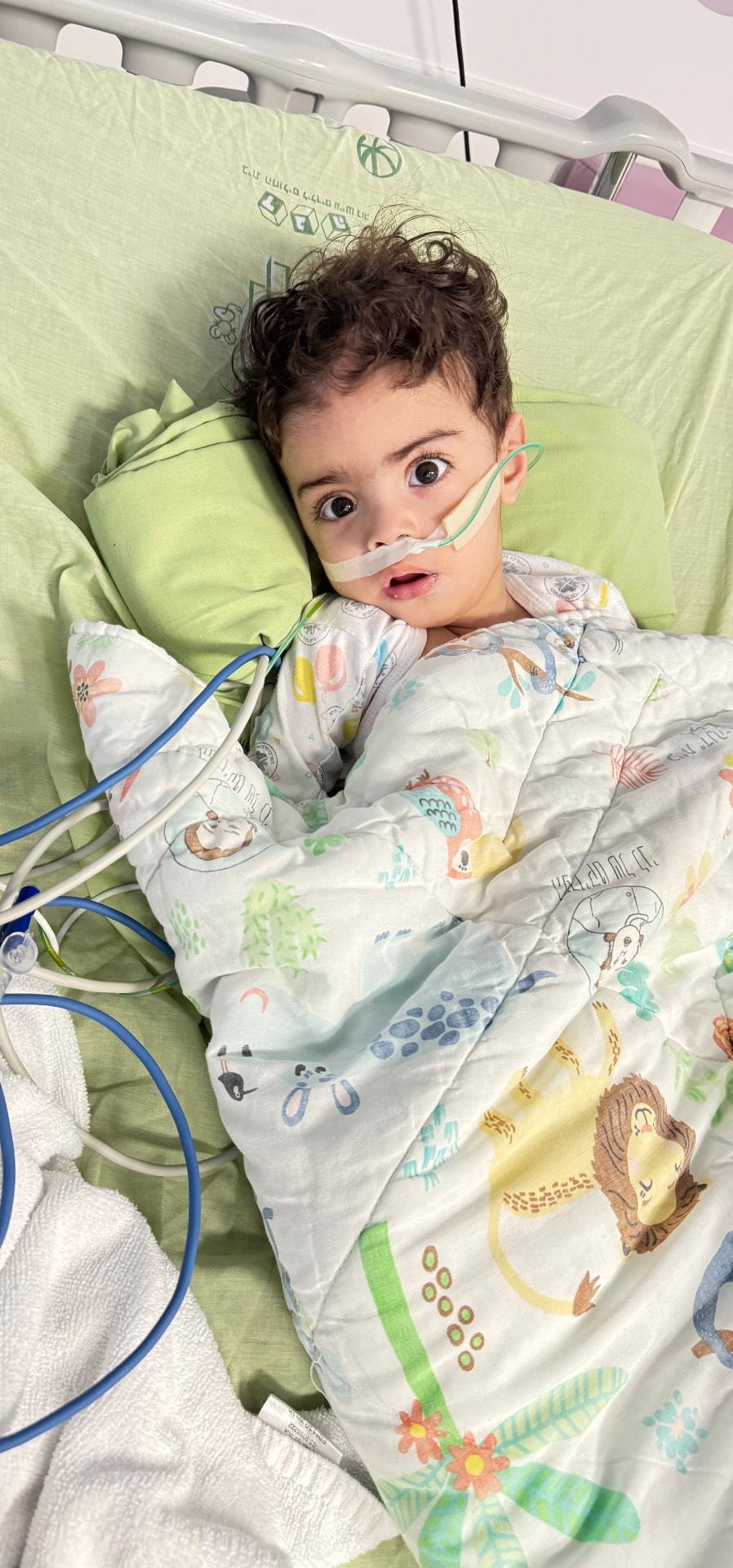
After he was resuscitated, Mohammad was taken by ambulance to intensive care. His bed was beside the very bed where his brother Issa had died approximately two months earlier. The hardest part was not simply seeing Mohammad in intensive care, but returning to the place where we had spent nine months with Issa and reliving everything up to his death. It felt as though we were living his story all over again.

After approximately a week and a half in the hospital, Mohammad came home again, but this time with medical equipment essential to his daily care.

Chapter 3: From the Joy of Coming Home to Our Hardest Moments
Chapter 03

Chapter 4

Chapter 4: When Mohammad’s Room Became Like an Intensive Care Unit

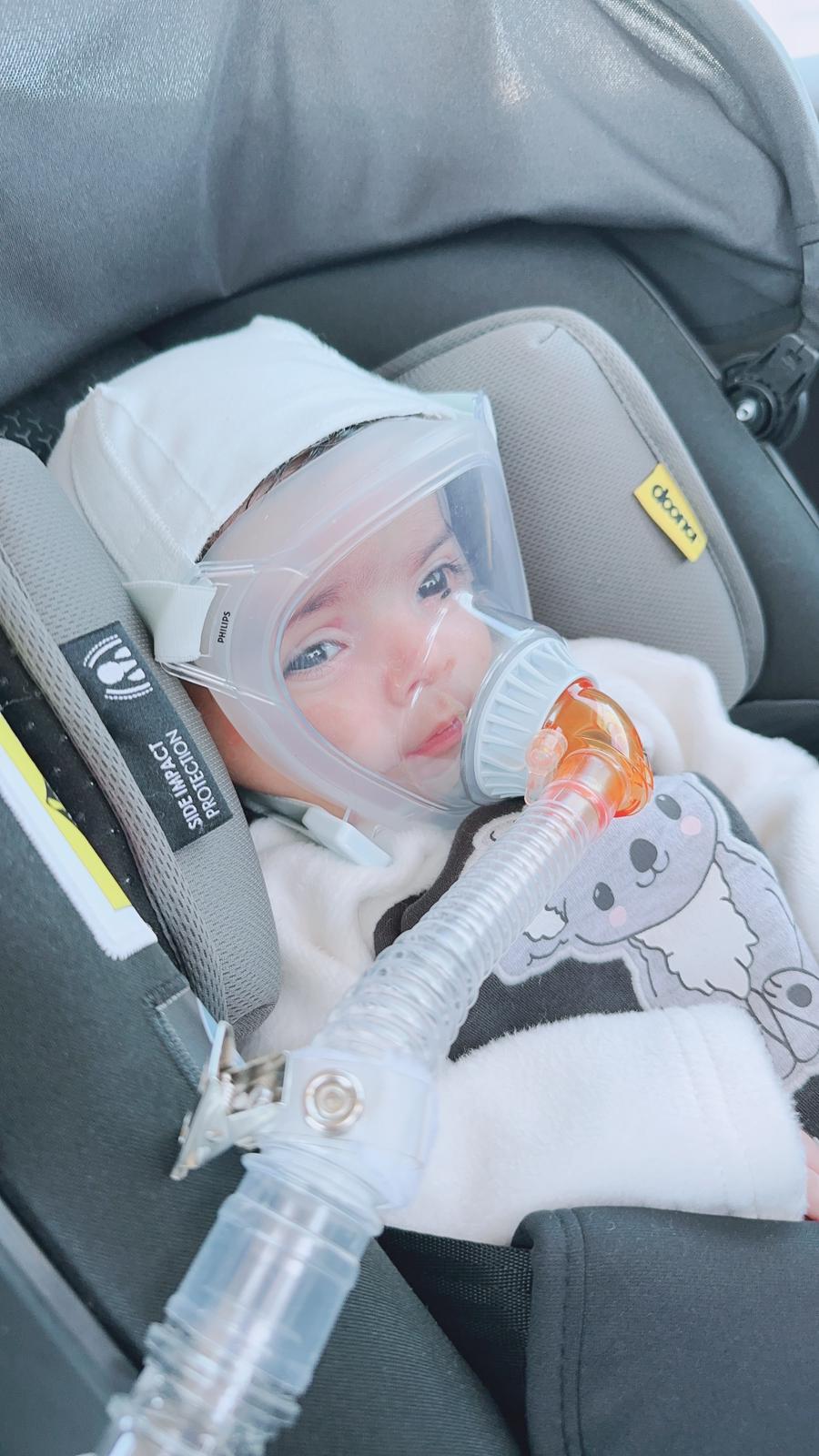
Mohammad returned home with a ventilator, suction machine, cough-assist device, oxygen concentrator, nebulizer, and a monitor for oxygen saturation and heart rate. Medical equipment became part of our home, and caring for him and monitoring his breathing became a responsibility around the clock.

We were not starting from scratch. The nine months we had spent beside Issa had given us experience with medical equipment and caring for a child who needed constant monitoring. Although Mohammad’s needs were different, that experience helped us care for him. We wanted our home to provide the care he needed while remaining a family home.

Chapter 4: When Mohammad’s Room Became Like an Intensive Care Unit
Chapter 04
Chapter 4: When Mohammad’s Room Became Like an Intensive Care Unit
01 / 01

Chapter 5

Chapter 5: Living with LAMA2

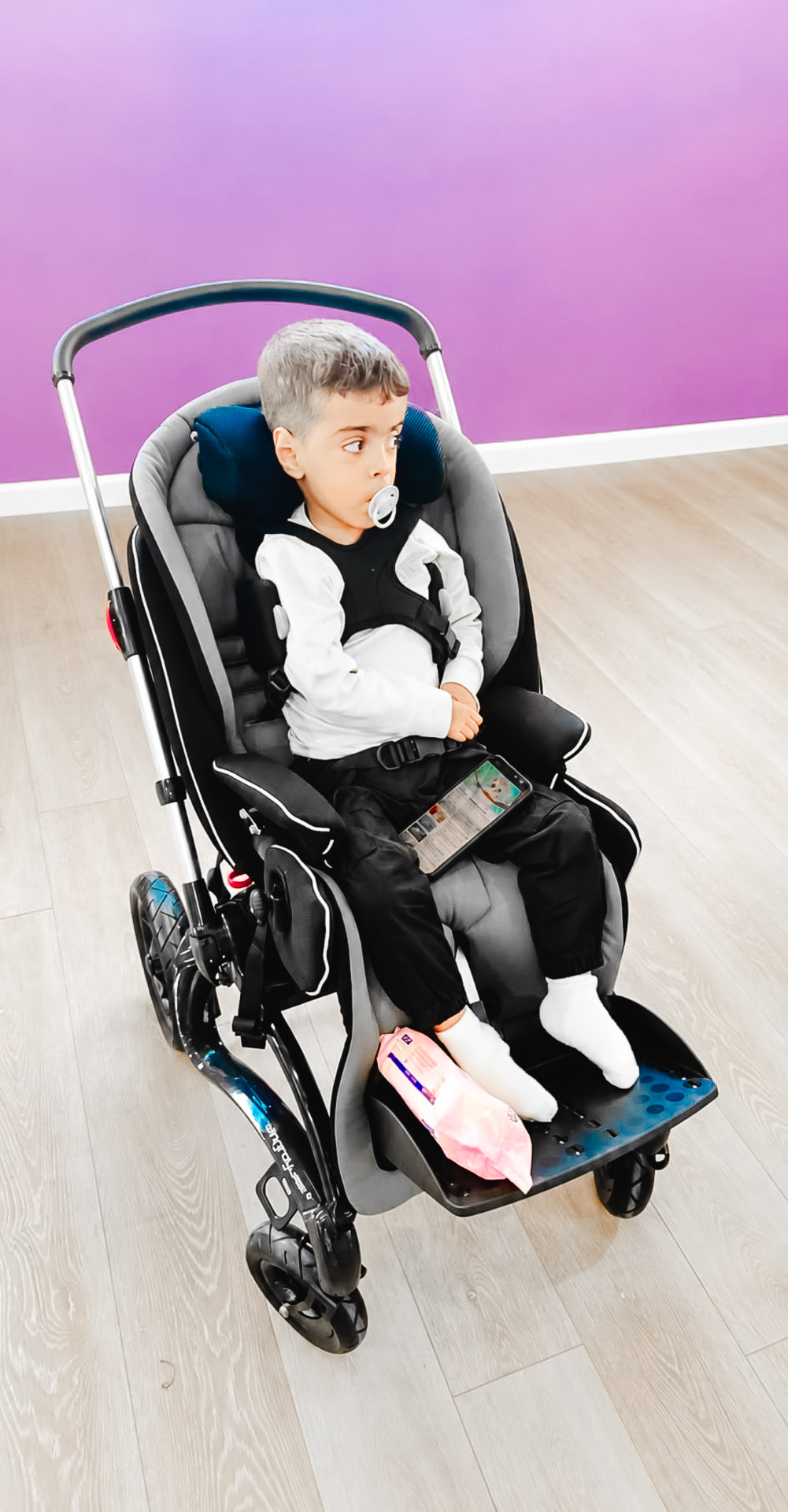
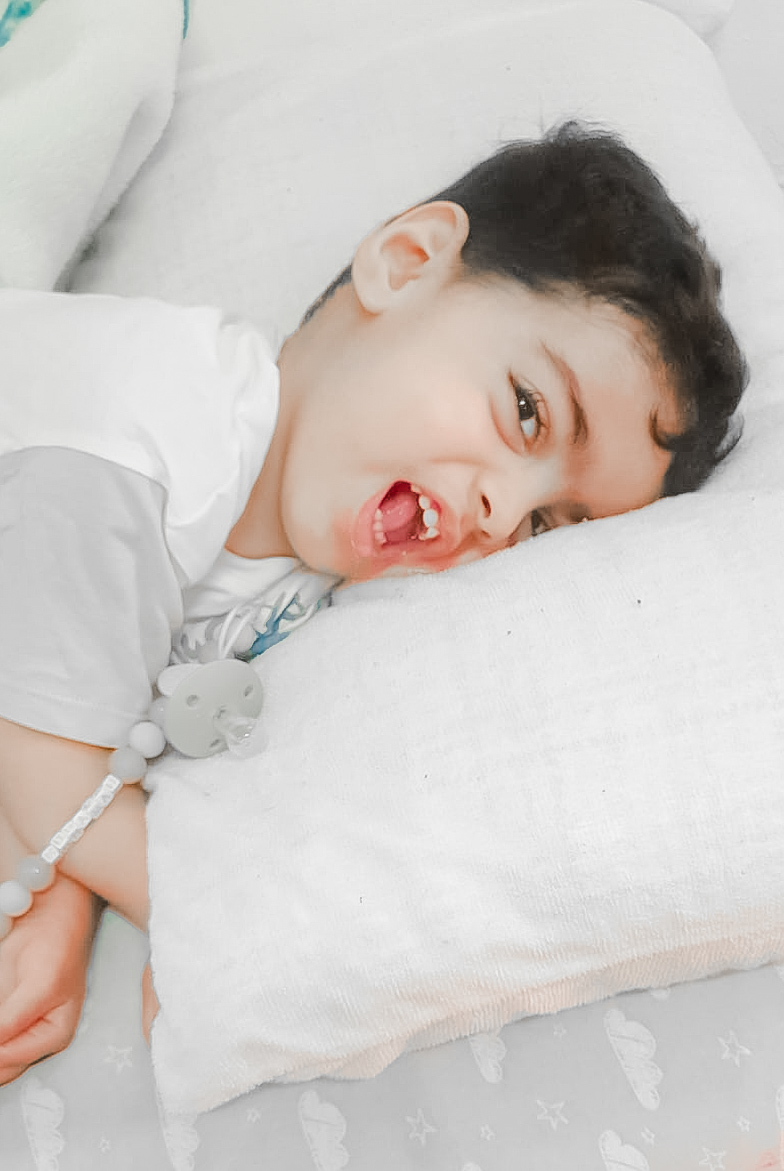
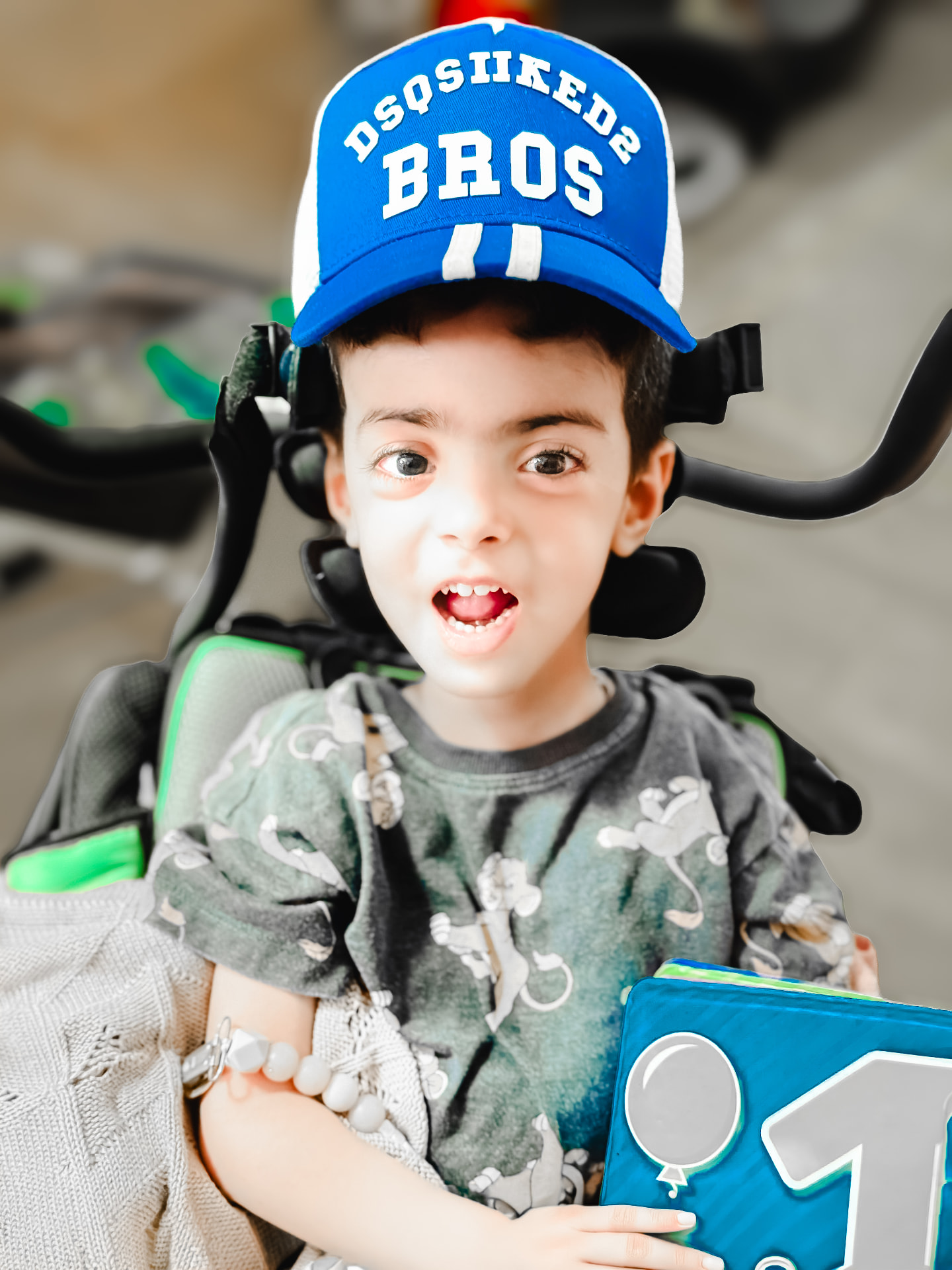
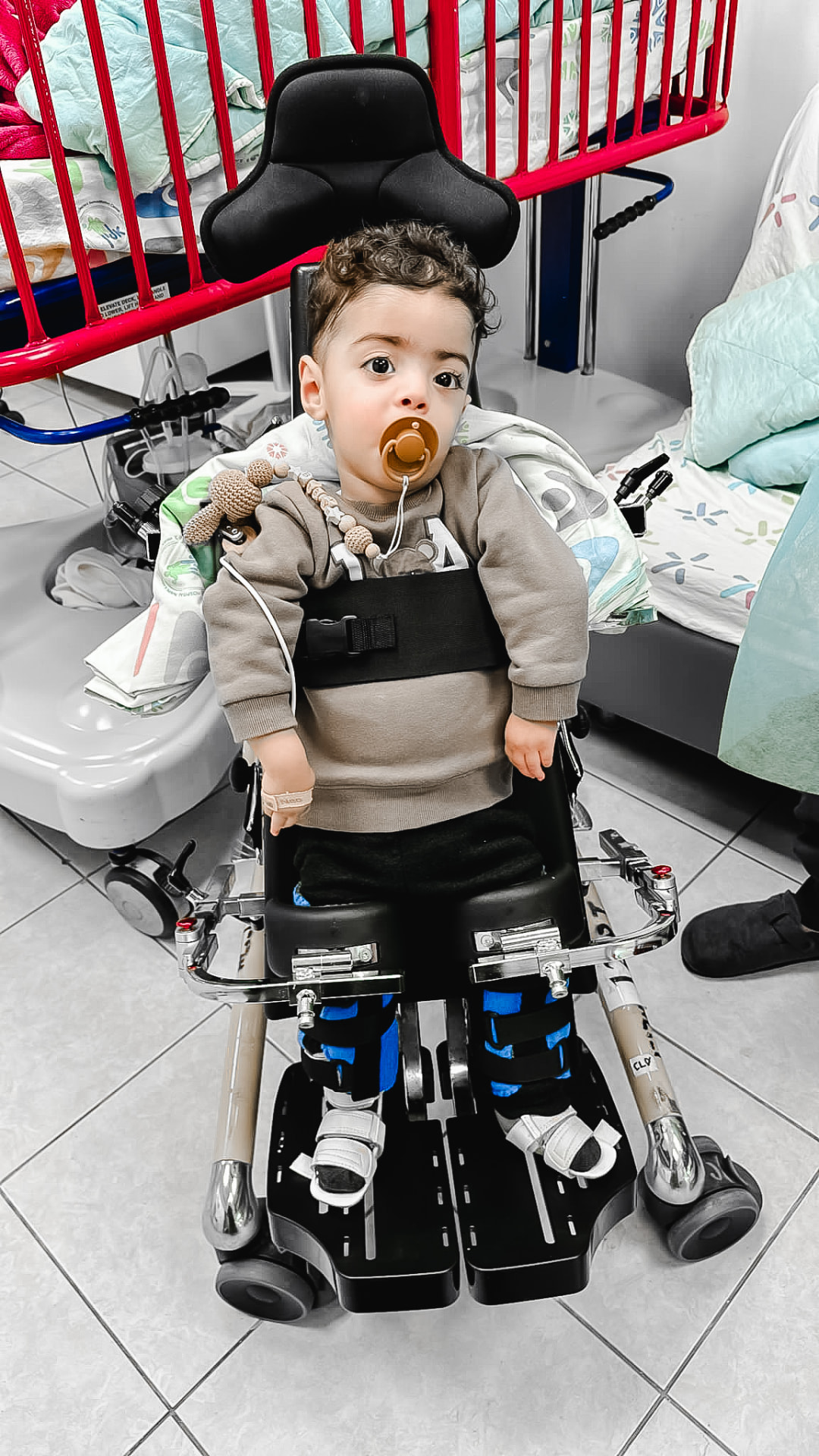
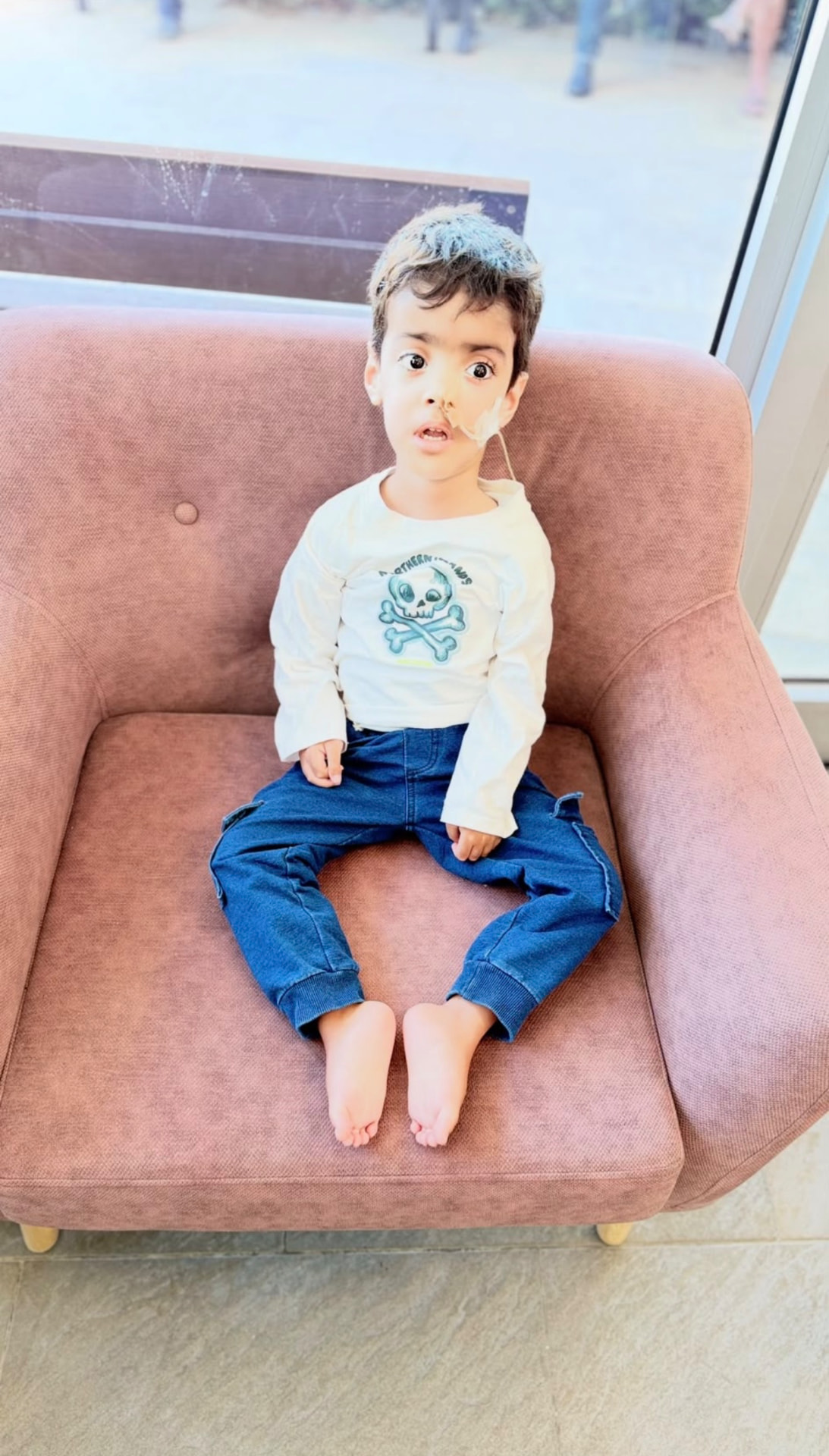
Mohammad has LAMA2-related congenital muscular dystrophy, a rare inherited condition that causes severe muscle weakness. He cannot sit independently or control his head without support, and he cannot move his arms and legs sufficiently to care for himself. He spends most of his time lying in bed. We try to seat him in his medical stroller with full support for his head, back, and body.

Even while asleep, he cannot change position on his own. We wake to reposition him and turn his body at least five times every night, sometimes more.

Mohammad has difficulty swallowing and feeding, so he receives nutrition through a nasogastric tube, which passes through his nose into his stomach. Doctors have recommended a feeding tube placed directly into the stomach (PEG), but we are hesitant because of his respiratory condition and the risks of anesthesia. We fear he might not return to his previous breathing status after anesthesia and could require a tracheostomy and breathing tube, as happened with Issa. We want to understand the risks and anesthesia plan before deciding.

Mohammad is extremely frightened of the cough-assist device, despite its importance in helping clear secretions from his airways. Using it is among the hardest moments for him and for us. Every change of position, attempt to seat him, or trip outside requires planning, assistance, and suitable equipment.

Chapter 5: Living with LAMA2
Chapter 05

Chapter 6

Chapter 6: The Mohammad We Know and Love

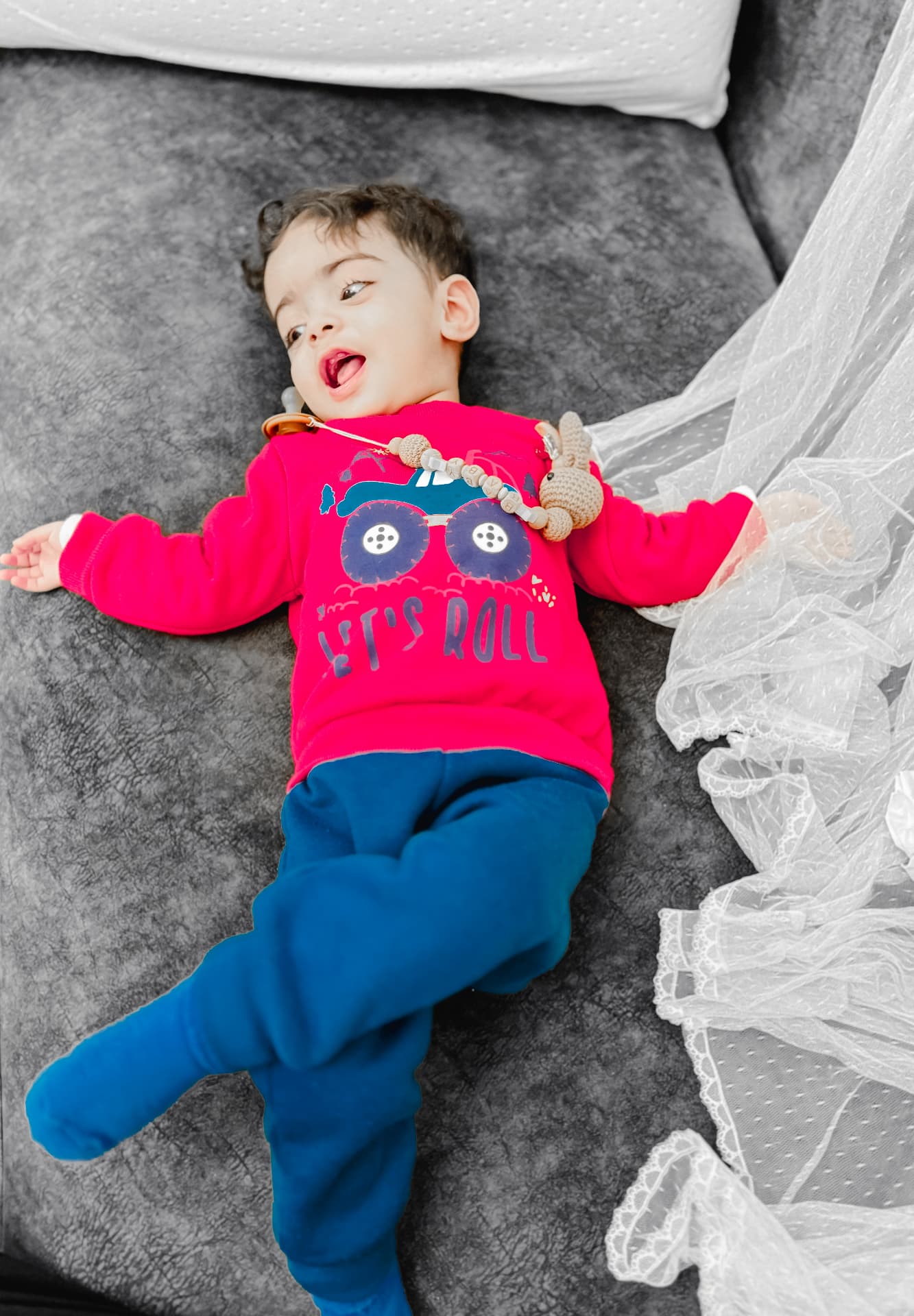
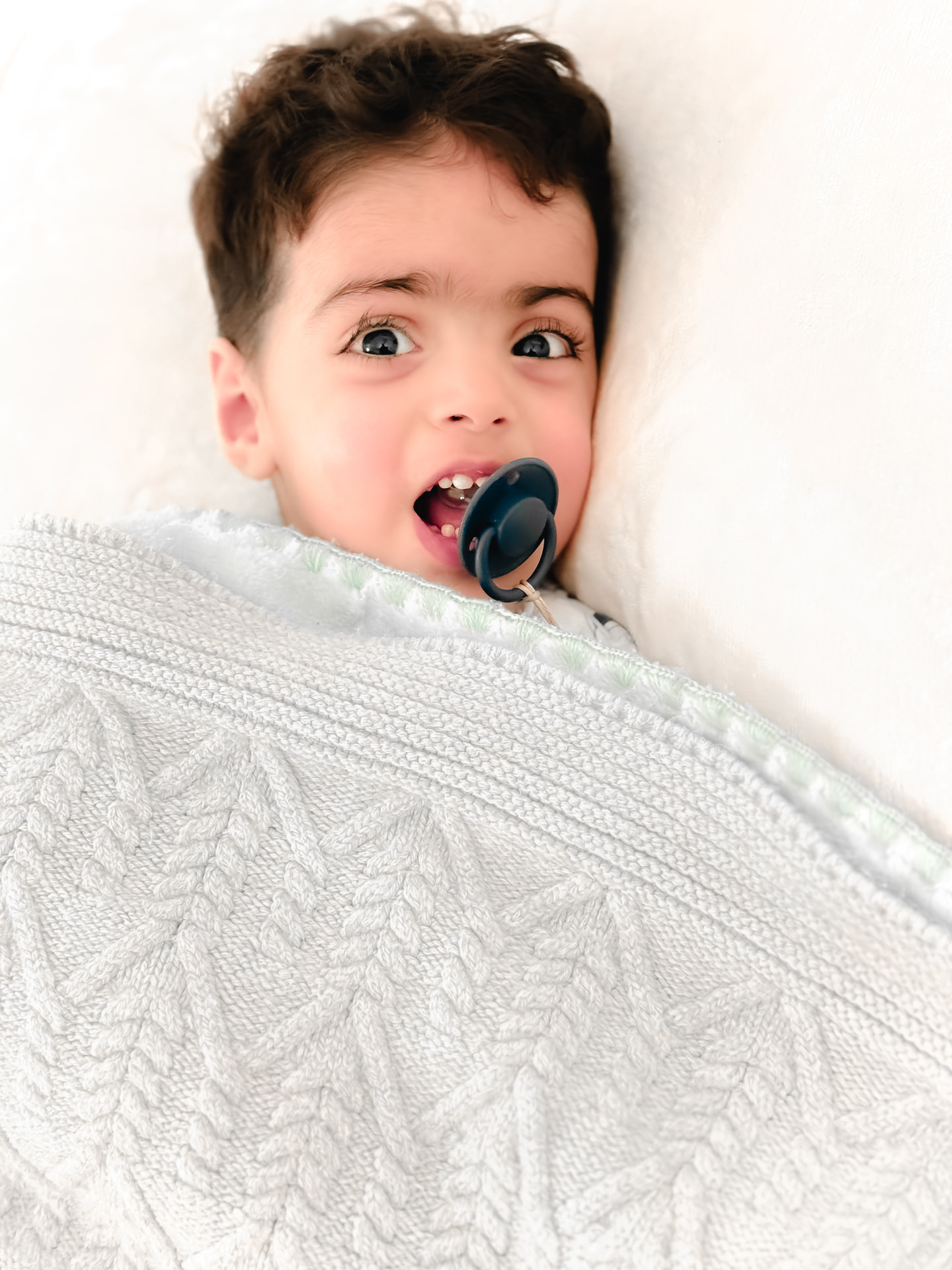
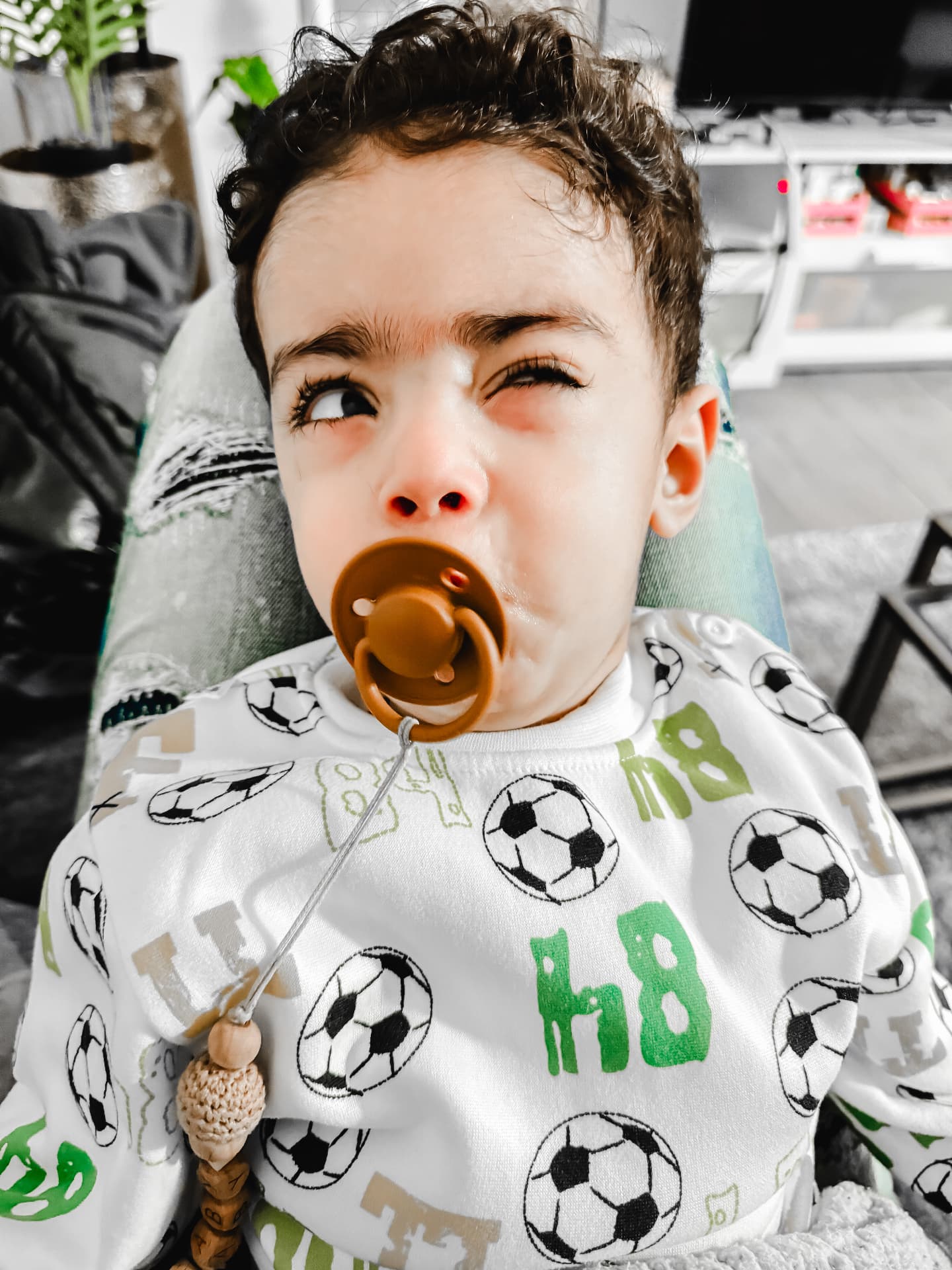
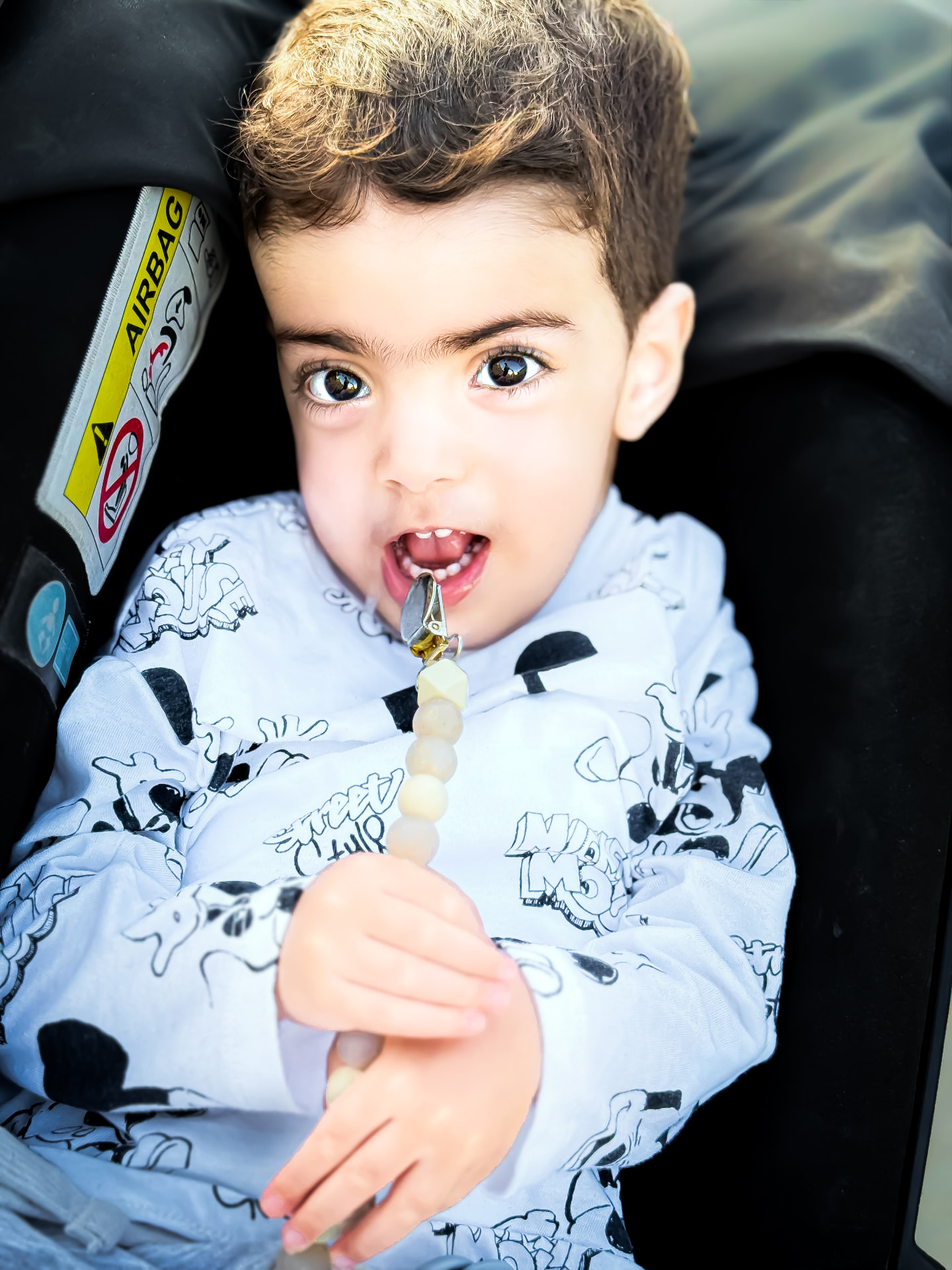
Beyond medical equipment and treatments, there is Mohammad, the child we know. He loves songs and videos on his iPad and enjoys familiar sounds and words. He repeats numbers from one to ten, some Arabic and English letters, animal names and sounds, and colors.

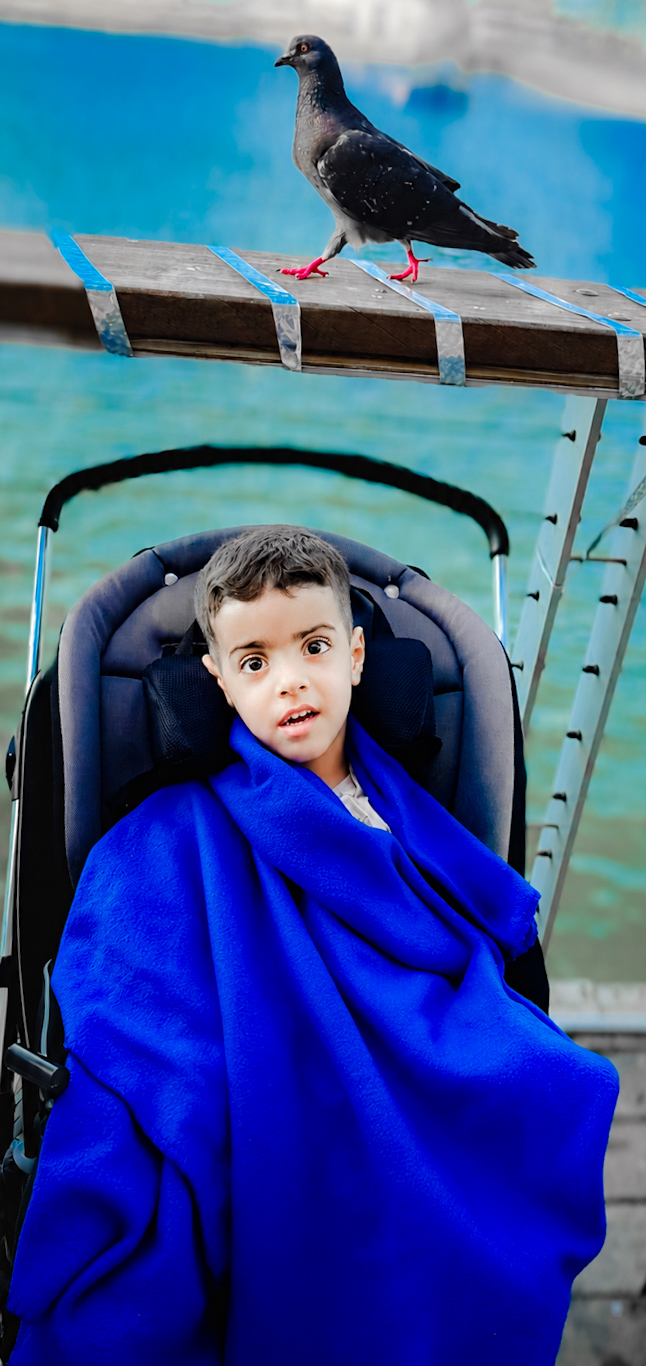
Mohammad loves watching videos beside his younger brother, and he especially loves going out for strolls in his stroller. As soon as we take him outside, he begins to laugh and show his happiness, enjoying the outing and watching everything around him. Even after a long time outdoors, when it is time to return home, he starts to cry because he does not want the outing to end. Some of our most precious moments are when we hold him in our arms and he smiles and laughs. We see a child with his own interests, personality, and way of engaging with the world.

Chapter 6: The Mohammad We Know and Love
Chapter 06
Chapter 6: The Mohammad We Know and Love
01 / 01

Chapter 7

Chapter 7: Therapy and Rehabilitation

Medical appointments and therapy have become part of our lives, but physical therapy sessions are very difficult for Mohammad. He is intensely afraid of therapy, especially when approached by unfamiliar people he does not know or trust. Sessions can become frightening for him.

Because of this fear, we as parents have had to carry out some of his physical therapy exercises ourselves at home, in a familiar environment where he feels safer. We try to help him calmly, using exercises appropriate to his condition and guided by professionals.

We continue to address Mohammad’s swallowing and feeding difficulties and look for ways to help him communicate and express his needs. As he grows, appropriate support for his head, back, and pelvis, along with a comfortable seated position, has become increasingly important. Mohammad also has a clearly noticeable deformity of his rib cage. For these reasons, we are looking for specialized medical strollers and seating that suit his physical needs and provide the support, stability, and comfort he requires.

During his final week at the rehabilitation daycare center, Mohammad received an eye-gaze tracking device. However, we have not yet learned to operate and use it properly, and we have not been able to benefit from it to communicate with him so far. We hope to learn how to use it and give him a real opportunity to try it.

Chapter 7: Therapy and Rehabilitation
Chapter 07
Chapter 7: Therapy and Rehabilitation
01 / 03
Chapter 7: Therapy and Rehabilitation
02 / 03
Chapter 7: Therapy and Rehabilitation
03 / 03

Chapter 8

Chapter 8: Mohammad and Our Family

Mohammad lives with his parents, his younger brother, and his younger sister, and he is a central part of our family life. We try to include him in visits, outings, and family activities whenever possible, despite the medical equipment and special arrangements he needs.

For us, caring for Mohammad is not only about medication, devices, and treatments. It is also about allowing him to experience childhood in his own way, surrounded by people who know and love him.

Chapter 8: Mohammad and Our Family
Chapter 08
Chapter 8: Mohammad and Our Family
01 / 02
Chapter 8: Mohammad and Our Family
02 / 02

Chapter 9

Chapter 9: Why We Created This Website

We created this website as a space dedicated to Mohammad, where we can tell his true story and share parts of his everyday life. We have come to appreciate how important it is to find reliable information and connect with families whose children also have LAMA2.

We hope this website will raise awareness of this rare condition and help families share knowledge, experiences, and information about care, rehabilitation, and research. We also want people to know Mohammad through his smile, interests, and personality—not only through his diagnosis and medical equipment.

We do not know what the coming years will bring, but we will never stop looking for ways to help Mohammad live more comfortably, communicate, and take part in life as fully as he can. Alongside his daily care, we regularly follow scientific research and clinical trials around the world aimed at developing treatments for LAMA2-related muscular dystrophy. We have set up regular updates through ChatGPT to stay informed about scientific developments, experimental treatments, and any progress that might one day offer Mohammad and other children with this condition new opportunities. We know that developing a treatment can take a long time, and research does not necessarily mean that a treatment will become available soon. Still, we believe in staying informed and being ready for any genuine opportunity that may arise. Mohammad is more than a medical diagnosis. He is a child with his own name, story, and world, and this space belongs to him. This is Mohammad’s story, and it continues.

Chapter 9: Why We Created This Website
Chapter 09

About LAMA2

LAMA2-related muscular dystrophy is a rare genetic condition that affects the muscles. It is caused by changes in the LAMA2 gene, which provides instructions for a protein called laminin-α2 (merosin) that helps keep muscle fibers strong and stable.

Signs often appear at birth or in the first months of life, such as low muscle tone and weakness. The condition can affect movement, breathing, and feeding.

It is inherited when both parents carry a change in the same gene. There is no cure yet, but physiotherapy, breathing and feeding support, and loving care make a real difference in children's lives.

Contact Us

We would love to hear from you. Write to us and we will read your message with love.

Your message is stored securely and never published.